
In today’s fast-paced mining and aggregate industries, efficiency, flexibility, and cost reduction are paramount. Enter the mobile crushing plant—a revolutionary piece of equipment that has transformed material processing. At its core, a mobile crushing plant is a self-propelled, integrated unit that performs the essential function of size reduction directly at the excavation or mining site. Unlike traditional stationary crushing systems that require fixed foundations and extensive infrastructure, a mobile plant is mounted on tracks or wheels, allowing it to be moved between sites or across a large mining area with remarkable ease.
The primary purpose of a mobile crusher is to process raw, blasted, or extracted material (such as rock, ore, or demolition concrete) into specific, reusable sizes. This on-the-spot processing eliminates the need to transport vast quantities of unprocessed material to a distant stationary plant, leading to massive savings in haulage costs, fuel, and time. For mining operations, this means the ability to follow a seam or ore body, set up quickly in remote locations, and adapt to changing project plans in real-time.
What Does a Mobile Crushing Plant Consist Of?
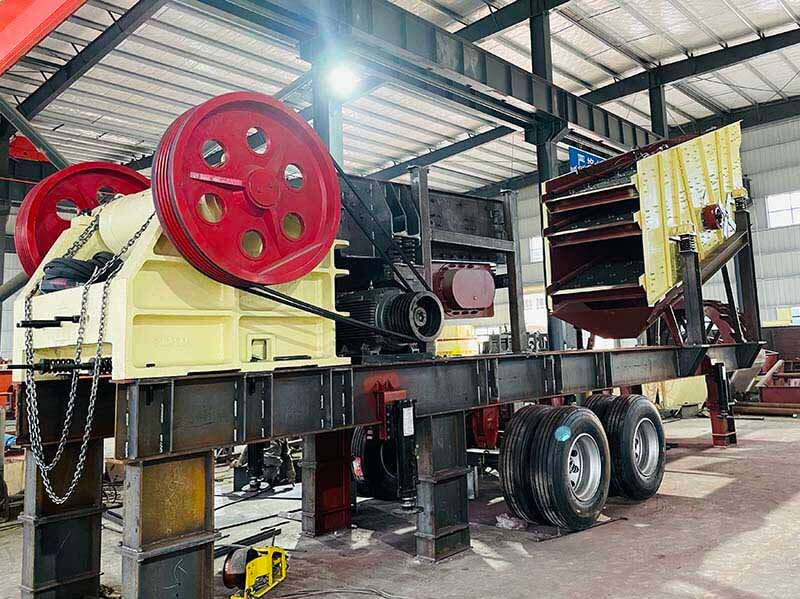
A mobile crushing plant is not a single machine but a sophisticated system integrated onto a mobile chassis. Its key components work in concert to receive, crush, screen, and sometimes even stockpile the finished product. The primary assemblies include:
- The Mobile Chassis: The foundation of the unit, typically robust tracks for superior mobility on rough terrain or heavy-duty wheels for on-road movement.
- The Primary Crusher: The first and most powerful crusher in the line, designed to take the largest feed material from the excavator or loader. Common types are jaw crushers (for compression crushing) or impact crushers (for softer materials).
- The Feeding System: A vibrating feeder or apron feeder that regulates the flow of material from the hopper into the crusher, ensuring a consistent and controlled process.
- The Conveying System: A network of belt conveyors that transports material between crusher stages and to the final stockpile. Radial conveyors have the feature of adjustable stockpiling.
- The Screening Unit: It is crucial for product classification. Vibrating screens separate the crushed material into different size fractions, sending oversized material back for further crushing (closed-circuit operation) and directing correctly sized product to their respective stockpiles.
- The Power Unit: A dedicated diesel generator or direct drive diesel engine that provides complete electrical and hydraulic power, ensuring true independence from the grid—a critical feature for remote mining sites.
- Control System: An integrated, often centralized, control panel or cabin that allows a single operator to command the entire crushing process, monitor performance, and ensure safety.
Key Applications of Mobile Crushing Plants in Mining and Beyond
The versatility of mobile crushing plants makes them indispensable across several sectors:
- In-Pit Crushing and Conveying (IPCC): This is a game-changer for large-scale open-pit mines. By placing a mobile crushing plant directly in the pit, operators can crush ore or overburden and then convey it to the following processing stage or waste dump. It reduces or even eliminates the need for a fleet of large, expensive haul trucks, slashing fuel consumption, emissions, and operating costs.
- Contract Crushing: For mining projects with a defined lifespan or smaller-scale operations, contracting a mobile crushing service is often more economical than investing in stationary infrastructure.
Processing of Various Materials:
- Hard Rock Mining: Crushing gold, copper, iron, and other metallic ores.
- Aggregate Production: Processing limestone, granite, and sand for construction.
- Recycling: On-site recycling of mine site concrete structures or asphalt.
- Multi-Stage Crushing on a Single Chassis: Modern “all-in-one” plants combine primary, secondary, and even tertiary crushing and screening units on a single, highly mobile track-mounted frame. It is ideal for medium-scale projects requiring complex final products.
What Equipment is suitable for a Mobile Crushing Plant?
Selecting the right equipment for your mobile crushing plant is critical to achieving optimal productivity and product quality. The configuration depends on the material’s properties (hardness, abrasiveness, size), the required final product (size, shape, gradation), and the production capacity needs.
-
Core Crushing Units: The Heart of the Plant
The choice of crusher type defines the plant’s capability.
- Mobile Jaw Crushers: The workhorse for primary crushing. Ideal for hard, abrasive materials. They use a fixed and a moving jaw to compress and break rock. They offer high reliability for producing a range of sizes, though the product shape can be more elongated.
- Mobile Impact Crushers (Horizontal Shaft Impactors – HSIs): Excellent for softer to medium-hard materials like limestone and recycled concrete. They use high-speed impact from hammers or blow bars to fracture material, producing a cubical product ideal for aggregate.
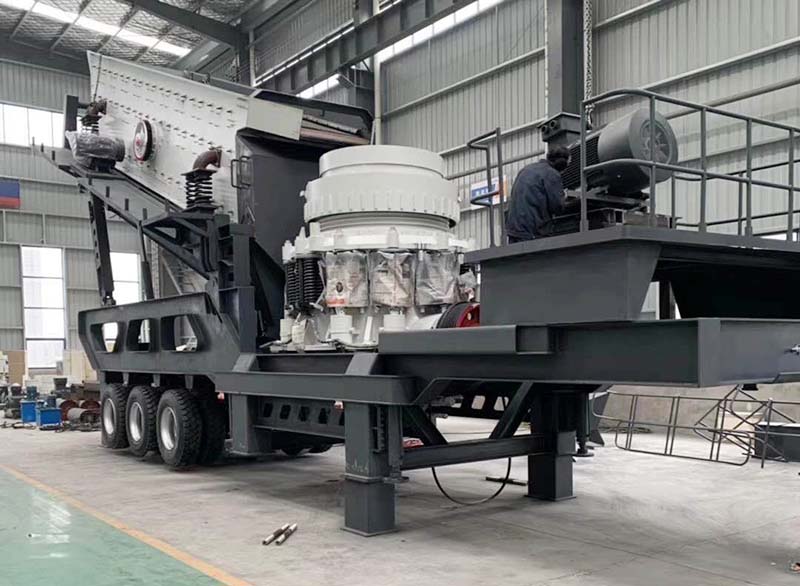
- Mobile Cone Crushers: Typically used as secondary or tertiary crushers. They compress material between a rotating mantle and a concave liner. Cone crushers are perfect for producing fine aggregates and are highly efficient in high-tonnage applications with hard, abrasive stone.
- Mobile Screening Crushers (Jaw/Impact combos): Hybrid units that combine a crusher with an integrated screen on a single chassis, offering compact, all-in-one solutions.
-
Supporting and Ancillary Equipment
A crushing plant is more than just the crusher. The supporting equipment ensures a smooth, continuous, and efficient operation.
- Mobile Screens (Scalpers & Classifiers): Often, a separate mobile scalping screen is used ahead of the primary crusher to remove fine material (natural sand or dirt). Closed-circuit plants have screens mounted with the crusher to recirculate oversize material.
- Feeders: Vibrating Grizzly Feeders (VGF) feed the crusher while scalping out fines via a grizzly section (a set of heavy-duty rails). Apron Feeders are suitable for very heavy, severe-duty applications with large, abrasive feed.
- Conveyors: The lifeline of the plant. Heavy-duty radial stackers allow for flexible stockpiling. Tunnel conveyors and main product conveyors must be sized to handle peak capacity.
- Power Supply: A robust, high-capacity diesel generator set is standard for mobility. Some wheeled options can be connected to an external grid if available.
- Dust Suppression System: A non-negotiable for environmental compliance and worker health. It typically consists of water spray nozzles at key transfer points fed by a dedicated water tank and pump system.
Building a Complete System: The Process Flow
A typical two-stage mobile setup for aggregate production might look like this:
- Excavator/Loader feeds raw material into the hopper of the Mobile Jaw Crusher (Primary).
- Crushed material from the jaw discharges onto a conveyor leading to a Mobile Screening Unit.
- The vibrating screen separates the material. Oversized material is sent via a return conveyor to a Mobile Cone Crusher (Secondary) for further reduction.
- The cone crusher’s product is sent back to the same screen (creating a closed circuit).
- Correctly sized product from the screen enters different stockpiles via a series of radial stacker conveyors.
Key Considerations for Mining Professionals
When specifying a mobile crushing plant for a mining application, focus on these factors:
- Durability & Wear Parts: Mining material is punishing. Choose units with heavy-duty construction, easy access for maintenance, and readily available wear parts (liners, blow bars, screen meshes).
- Automation & Monitoring: Modern plants offer advanced control systems that optimize crusher load, monitor wear, and provide real-time production data, enabling proactive maintenance and maximizing yield.
- Fuel Efficiency: Given the remote operation and high power demands, an efficient engine impacts your operating cost.
Conclusion: A Strategic Investment for Agile Mining
The mobile crushing plant is no longer just an alternative to stationary systems. It is a strategic tool for enhancing profitability and operational agility. By bringing the crusher to the material, it reduces logistics costs, lowers the carbon footprint, and enables mines to respond dynamically to changing geological and market conditions.
We offer customization for additional models to meet the diverse requirements of our customers. The price of the mining equipment will be determined by the manufacturer’s type, machine model, manufacturing process capacity, etc. You are welcome to consult JXSC‘s professional engineers to get a quotation based on your requirements. We can design a sand-making and crushing production line flow chart for you.
