
In the world of mining and aggregate production, sustainability is no longer a niche interest—it’s an operational imperative. As urban expansion and infrastructure renewal accelerate globally, the mountains of construction and demolition (C&D) waste generated present both a significant environmental challenge and a remarkable resource opportunity. This blog explores the transformative process of recycling concrete waste, with a specific focus on its conversion into high-quality sand—a process that closes the loop on construction, conserves natural resources, and generates economic value from what was once considered waste.
What is Concrete Waste? Understanding the Raw Material
Concrete waste, often referred to as “reclaimed concrete aggregate” or “crushed concrete,” is the material that remains after the demolition of structures like buildings, bridges, roads, and pavements. It also includes surplus material from construction sites, such as returned wet concrete or broken pieces from testing. This waste is not a homogeneous material; it typically consists of a mixture of hardened cement paste, natural aggregates (like gravel and stone), and often reinforcement bars, wire mesh, or other embedded items.
The environmental imperative for recycling this material is stark. Recycling concrete into sand directly alleviates this pressure, turning a linear economy (extract, use, dispose) into a circular one.
Key Applications of Recycled Concrete Waste
Recycled concrete is far from being a substandard material. When processed correctly, it finds robust applications across the construction sector:
- As Aggregate for New Concrete: Processed concrete waste can replace a significant portion of virgin aggregate in new concrete mixes for non-structural applications such as sidewalks, curbs, and road bases. With advanced processing, it can even be used in certain structural elements.
- Road Base and Sub-base Material: This is the most common application. Crushed concrete is an excellent, durable, and cost-effective material for the foundational layers beneath asphalt roads, parking lots, and driveways. It provides superior drainage and load-bearing properties.
- Landscaping and Drainage Projects: recycled aggregate is used for erosion control, backfill for retaining walls, and as a drainage layer in French drains.
- Pipe Bedding: It serves as a stable and permeable bedding material for underground utility pipes.
- Gabion Baskets and Riprap: Larger pieces are used to fill gabion baskets for retaining walls or as riprap for shoreline protection against erosion.
And critically, Manufactured Sand: Through specific crushing and shaping processes, concrete waste can be refined into a granular material that meets the size and gradation specifications for sand. This “manufactured” or “recycled” sand is the focus of our next section, representing a direct solution to the global sand shortage.
The Process of Transforming Concrete Waste into Sand
Converting bulky, irregular concrete debris into consistent, usable sand is a systematic multi-stage process that involves breaking, separating, and refining. The goal is to produce a clean, well-graded material free of contaminants like wood, plastic, and metals, with particle shapes suitable for construction applications.
The Step-by-Step Processing Chain
Pre-Sorting and Deconstruction:
The process begins at the demolition site or the recycling yard. Larger pieces of debris (wood, metals, asphalt) are manually or mechanically removed. Ideally, source separation—keeping concrete debris apart from other waste—yields a cleaner feedstock.
Primary Crushing (Jaw Crusher):
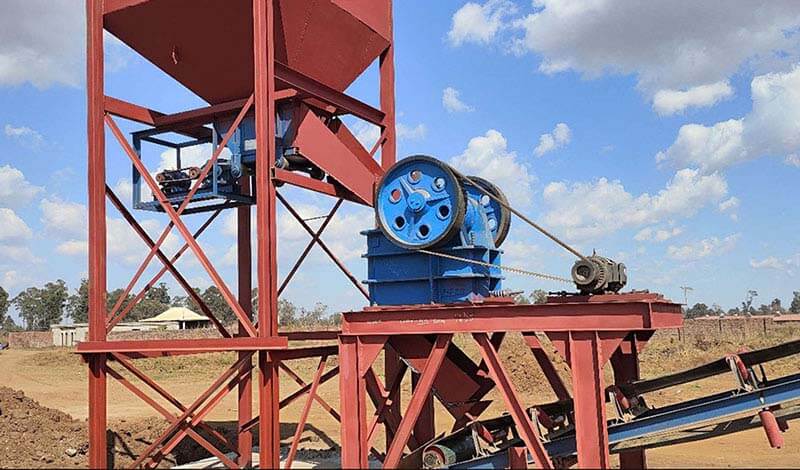
Feed the large chunks of concrete (often exceeding 24 inches) into a primary jaw crusher. This robust machine applies compressive force to break the concrete into aggregate with 4-6 inches or smaller. An electromagnet or magnetic pulley here removes the majority of reinforcing steel (rebar).
Secondary Crushing and Shaping (Impact Crusher):
This is the most critical stage for sand production. Convey the pre-crushed material to a secondary impact crusher or a cone crusher. Impact crushers are particularly favored for sand manufacturing because they use high-speed impact to fracture the concrete along natural fault lines. It promotes a more cubical particle shape—essential for good sand performance—as opposed to flaky or elongated pieces. Adjusting the speed and gap settings of the crusher allows operators to influence the final product size.
Screening:
The crushed material then passes through a vibrating screen or series of screens. Screens with different mesh sizes sort the material into various product streams: larger aggregate (e.g., ¾”), smaller aggregate, and the fine fraction that will become sand. Oversized material is typically sent back through the crushers in a closed-loop system.
Tertiary Crushing and Sand Manufacturing (Vertical Shaft Impactor – VSI):
To refine the fine fraction and achieve a consistent, well-shaped sand product, a Vertical Shaft Impactor (VSI) crusher is often employed. A VSI uses a high-speed rotor to fling particles against a crushing chamber, creating intense particle-on-particle impact. This “rock-on-rock” crushing is exceptional for shaping, eliminating soft or flaky particles, and producing a graded sand that rivals natural sand in quality.
Final Cleaning and Contaminant Removal:
Even after magnetic separation, some contaminants persist. A water washing system with cyclones and sand screws may remove lightweight contaminants. For a dry process, air classifiers can separate materials. A final pass over a dewatering screen removes excess water, leaving a damp, ready-to-use sand product.
Essential Equipment for a Concrete-to-Sand Recycling Operation
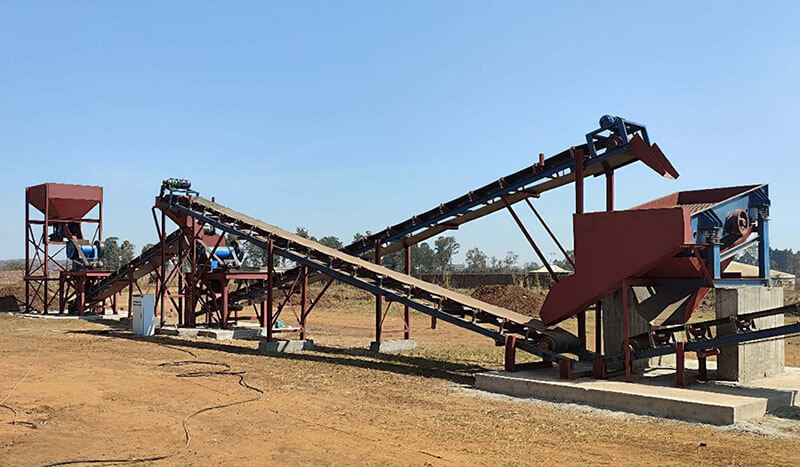
Setting up an efficient recycling plant requires a carefully selected suite of equipment. Here’s a breakdown of the core machinery needed:
Feeding System: A vibrating grizzly feeder or an apron feeder regulates the flow of raw concrete into the primary crusher, separating very fine material initially.
Crushing Circuit:
- Primary Jaw Crusher: For initial size reduction. Robust and reliable, with a strong hydraulic system for clearing jams.
- Secondary Impact Crusher or Cone Crusher: For further reduction and initial shaping.
- Tertiary VSI Crusher (The Sand Maker): The heart of the sand manufacturing process. It is crucial for producing cubical, well-graded sand.
- Screening Equipment: Multi-deck vibrating screens are essential for classifying materials into different size fractions and ensuring product specification compliance.
- Material Handling: A network of belt conveyors to transport material between stages. Heavy-duty, abrasion-resistant belts are mandatory.
Separation Technology:
- Magnetic Separators: Suspended magnets or magnetic head pulleys to remove ferrous metals at multiple stages.
- Water Washing Plant (Optional but Recommended): log washers, hydraulic classifiers, cyclones, and dewatering screens producing a clean, high-value sand.
- Air Separators/Particle Classifiers: For dry processing plants, to remove lightweight contaminants.
- Dust Suppression System: A network of water sprays at transfer points. a baghouse filter system is critical for environmental compliance and worker safety, as concrete crushing generates significant silica dust.
- Power Unit: A large diesel generator or a grid connection to power the entire electric system of motors and controllers.
- Control System: A centralized Programmable Logic Controller allows for automated operation, monitoring of crusher loads, and adjustment of settings for optimal product yield.
Maximizing Quality and Marketability
The success of recycled sand hinges on its quality. Key parameters include:
- Particle Shape: Cubical particles provide better workability and strength than elongated or flaky ones.
- Gradation: The sand must fall within standard sieve size distributions (e.g., ASTM C33) for its intended use.
- Cleanliness: Maintaining low levels of contaminants, particularly sulfates, chlorides, and organic matter, is vital.
- Absorption: Recycled concrete aggregate tends to have higher water absorption than virgin aggregate.
By investing in the right process—centered on impact crushing and shaping—and employing robust separation technology, producers can create a recycled sand product that is not just an alternative, but a preferred, sustainable choice for the forward-thinking construction industry.
Conclusion
Recycling concrete waste into sand is more than a waste management strategy; it’s a sophisticated form of urban mining. It transforms a liability into an asset, conserves precious natural resources, reduces carbon emissions from transport and virgin extraction, and builds a more resilient and circular construction economy. For mining and aggregate businesses, investing in concrete recycling technology represents diversification into a growing market driven by environmental regulation. The process, from the primary jaw crusher to the final sand-making VSI, is a testament to how innovation can turn the rubble of our past into the foundation of our future.
We offer customization for additional models to meet the diverse requirements of our customers. The price of the mining equipment will be determined by the manufacturer’s type, machine model, manufacturing process capacity, etc. You are welcome to consult JXSC‘s professional engineers to get a quotation based on your requirements. We can design a sand-making and crushing production line flow chart for you.
