
The demand for crushed stone continues to grow worldwide due to rapid urbanization, infrastructure development, road construction, and demand for concrete and asphalt materials. For quarry owners, mining companies, and aggregate producers, setting up a stone crusher plant can be a profitable investment. However, success depends on much more than purchasing crushing machines. A properly designed plant must integrate geological analysis, equipment selection, process optimization, cost control, and environmental management. Many crushing projects fail to reach their expected production capacity because of poor planning, unsuitable equipment combinations, or inefficient plant layouts. This Complete Guide to Setting Up a Stone Crusher Plant explains the entire process from initial planning and material testing to equipment selection, plant design, operation optimization, and long-term profitability. Whether you are planning a small aggregate production line or a large-scale quarry crushing project, understanding these key factors can help maximize your return on investment.
-
What Is a Stone Crusher Plant and How Does It Work?
A stone crusher plant is a complete industrial system designed to process large rocks into different aggregates. These finished products are widely used in:
- Construction concrete production
- Highway and railway projects
- Asphalt manufacturing
- Building materials
- Mining backfill applications
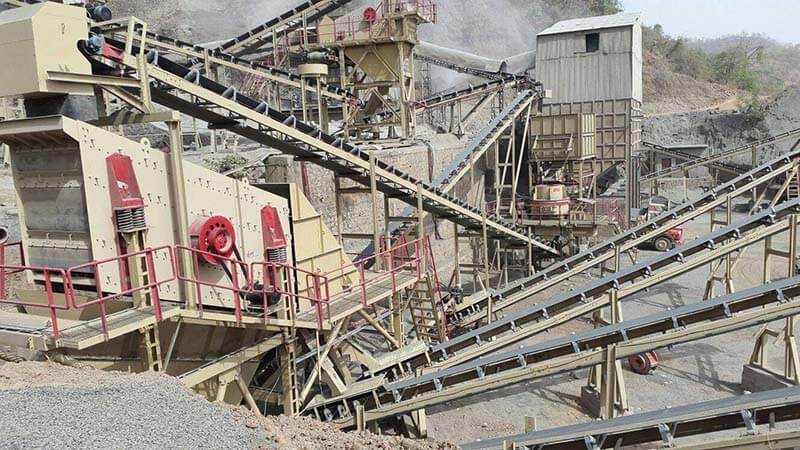
A typical crushing plant follows a continuous workflow:
Raw Material → Feeding → Primary Crushing → Secondary/Tertiary Crushing → Screening → Final Product Storage
The main objective is to reduce large rocks into specified sizes while maintaining high production efficiency and product quality.
A complete stone crusher plant normally consists of:
- Feeding equipment
- Crushing equipment
- Screening equipment
- Conveying systems
- Dust control systems
- Electrical and automation systems
Each component must work together. A poorly matched feeder, stone crusher, or screen can create production bottlenecks and increase operating costs.
-
Planning Before Setting Up a Stone Crusher Plant
Successful projects start with careful planning before any equipment purchase.
Step 1: Analyze Market Demand and Production Requirements
Before designing the plant, investors should determine:
- What products are required in the local market?
- What production capacity is needed?
- What final aggregate sizes should be produced?
For example:
- Road construction may require 0–5 mm sand, 5–20 mm gravel, and 20–40 mm stone.
- Concrete production usually requires high-quality cubical aggregates.
- Railway projects require strict particle size and shape standards.
A plant producing 100 tons per hour (TPH) requires a completely different design compared with a 500 TPH industrial crushing facility.
Step 2: Evaluate Quarry Material Characteristics
The raw material determines the crushing process. Before equipment selection, professional operators usually conduct laboratory testing to understand:
- Rock hardness
- Abrasion resistance
- Moisture content
- Crushing strength
- Mineral composition
A typical laboratory-to-industrial workflow includes:
Sample Collection → Laboratory Testing → Material Analysis → Crusher Selection → Pilot Production → Full-Scale Operation
For example:
- Granite and basalt are hard and abrasive, requiring strong jaw crushers and cone crushers.
- Limestone is softer and often suitable for impact crushing.
- River stones may require additional shaping equipment such as VSI crushers.
- Understanding the material first prevents costly equipment mismatches.
-
Stone Crusher Plant Setup Process: Step-by-Step
Step 1: Site Preparation and Infrastructure Construction
The plant location should provide:
- Easy access to raw materials
- Transportation convenience
- Sufficient space for expansion
- Stable ground conditions
Site preparation normally includes:
- Land leveling
- Foundation construction
- Electrical installation
- Drainage systems
- Equipment installation areas
A well-prepared site improves installation efficiency and reduces future maintenance problems.
Step 2: Install the Feeding System
The feeding system controls the amount of material entering the crushing circuit.
Common equipment includes:
- Hopper
- Vibrating feeder
- Grizzly feeder
The feeder must provide stable and continuous material flow. Irregular feeding can cause:
- Crusher overload
- Reduced production capacity
- Uneven product quality
Practical recommendation:
The feeding system should always be designed for the maximum expected production rate, not just the average capacity.
Step 3: Primary Crushing Installation
Primary crushing is the first stage of crushing large rocks into smaller pieces.
Jaw Crusher
Jaw crushers are the most common primary crushers because they can handle large feed sizes and hard materials.
Advantages:
- High crushing capacity
- Simple structure
- Easy maintenance
- Suitable for granite, basalt, and other hard rocks
Gyratory Crusher
For very large mining operations, gyratory crushers provide:
- Extremely high throughput
- Continuous operation
- Large feed opening capacity
Primary crusher selection depends mainly on:
- Maximum rock size
- Required production capacity
- Material hardness
Step 4: Secondary and Tertiary Crushing
After primary crushing, materials enter secondary crushing stages to achieve smaller sizes and better particle shapes.
Cone Crusher
Cone crushers are widely used for hard and abrasive materials.
Advantages:
- Excellent crushing efficiency
- Good product shape
- Low operating cost
Common applications:
- Granite
- Basalt
- Quartzite
Impact Crusher
Impact crushers are suitable for softer materials such as limestone.
Advantages:
- High reduction ratio
- Excellent cubic particle shape
VSI Crusher
Vertical shaft impact crushers are commonly used for manufactured sand production.
They improve:
- Particle shape
- Aggregate quality
- Fine material production
-
How to Design an Efficient Stone Crusher Plant Layout
Plant layout directly affects production efficiency and operating costs.
A good layout should minimize unnecessary material movement and create a smooth production flow.
Important design areas include:
Raw Material Receiving Area
Should include:
- Truck unloading area
- Hopper
- Feeding system
Design goals:
- Easy transportation access
- Safe operation
- Continuous feeding
Crushing and Screening Area
The crushing area should provide:
- Enough space for equipment maintenance
- Proper safety clearance
- Efficient material flow
The screening area should ensure:
- Accurate product classification
- Minimum material loss
- Effective return of oversized materials
Finished Product Storage Area
Stockpiles should be designed according to:
- Product quantity
- Transportation requirements
- Customer demand
A well-organized stockpile system prevents mixing different aggregate sizes.
-
Stone Crusher Plant Cost and Investment Factors
The cost of setting up a stone crusher plant varies depending on capacity, equipment configuration, and location.
Major investment components include:
Equipment Cost
Usually includes:
- Stone Crushers
- Vibrating Screens
- Vibrating Feeders
- Belt Conveyors
- Electrical systems
Installation Cost
Includes:
- Foundation construction
- Equipment assembly
- Commissioning
- Labor
Operating Cost
Main expenses:
- Electricity or fuel
- Wear parts
- Maintenance
- Labor
- Transportation
A practical investment decision should consider not only initial purchase price but also long-term operating costs.
Cheap equipment may reduce initial investment but increase downtime and maintenance expenses.
-
How to Improve Stone Crusher Plant Efficiency
After installation, optimization is essential for achieving the designed production capacity.
Optimize Feeding Management
Stable feeding improves:
- Crusher performance
- Energy efficiency
- Product consistency
Avoid:
- Sudden material surges
- Empty crusher operation
- Oversized feed entering the system
Improve Equipment Maintenance
Preventive maintenance reduces unexpected downtime.
Recommended practices:
- Regular inspection of wear parts
- Monitor vibration and temperature
- Replace damaged components before failure
Use Automation Technology
Modern crushing plants increasingly adopt:
- PLC control systems
- Remote monitoring
- Production data tracking
Benefits:
- Improved safety
- Reduced labor requirements
- Better production control
-
Environmental Protection in Stone Crushing Operations
Modern crushing plants must consider environmental responsibility.
Important solutions include: Dust Control
Methods:
- Water spraying systems
- Dust collectors
- Enclosed conveyors
- Noise Reduction
Solutions:
- Equipment isolation
- Proper plant layout
- Noise barriers
- Sustainable Production
Modern plants also focus on:
- Energy-efficient motors
- Reduced material waste
- Recycling construction waste
-
Common Problems and Solutions in Stone Crusher Plants
Even well-designed plants may experience operational issues.
Low Production Capacity
Possible causes:
- Incorrect equipment selection
- Poor feeding control
- Screen blockage
Solutions:
- Optimize process flow
- Adjust crusher settings
- Improve material handling
Excessive Wear of Crusher Parts
Causes:
- Highly abrasive materials
- Incorrect crusher type
- Poor maintenance
Solutions:
- Select suitable wear-resistant materials
- Optimize crusher operation parameters
-
How to Choose a Reliable Stone Crusher Plant Manufacturer
Choosing the right supplier is one of the most important decisions.
A professional manufacturer should provide:
- Complete crushing plant design
- Customized equipment selection
- Installation support
- Technical training
- Spare parts supply
Experienced suppliers can help optimize:
- Production capacity
- Investment cost
- Energy consumption
- Long-term operation reliability
Conclusion
Setting up a stone crusher plant is a complex project that requires careful planning, technical knowledge, and practical experience. From laboratory testing of raw materials to industrial-scale production optimization, every step influences the plant performance. A well-designed stone crusher plant is not simply a collection of machines—it is an integrated production system designed to deliver stable output, lower operating costs, and long-term profitability. By following this complete guide, investors and operators can make smarter decisions and build a crushing plant that performs efficiently for years.
We offer customization for additional models to meet the diverse requirements of our customers. The price of the mining equipment will be determined by the manufacturer’s type, machine model, manufacturing process capacity, etc. You are welcome to consult JXSC‘s professional engineers to get a quotation based on your requirements. We can design a sand-making and crushing production line flow chart for you.