
In the ever-evolving world of construction materials, innovation is key to sustainability and efficiency. One such innovative frontier is the processing of zeolite—a versatile, naturally occurring mineral—into high-quality construction sand. For mining operations looking to diversify their product lines or tap into new markets, this process represents a significant opportunity. This comprehensive guide will explore what zeolite is, detail the step-by-step conversion process into construction sand, and outline the essential equipment needed to make it happen.
What is Zeolite?
Zeolite is a fascinating microporous, aluminosilicate mineral that occurs naturally but can also be synthesized industrially. Its name, derived from Greek words meaning “boiling stone,” hints at its unique property of releasing water upon heating without damaging its crystalline structure.
- Naturally formed from volcanic ash and alkaline water over millions of years, zeolite boasts a honeycomb-like framework of cavities and channels. This structure confers exceptional properties, including high cation-exchange capacity, adsorption, and molecular sieving.
- Traditionally, zeolite has been prized in applications ranging from water purification and animal feed additives to agricultural soil enhancers and industrial catalysts.
- Its natural abundance, chemical stability, and non-toxic nature make it an attractive candidate for repurposing into construction materials.
The Process of Transforming Zeolite into Construction Sand
Converting raw zeolite ore into specification-grade construction sand is a systematic process that involves several key stages. The goal is to transform the mined material into a consistent, granular product that meets standard construction sand requirements for particle size distribution, cleanliness, and structural integrity.
-
Mining and Primary Crushing:
The process begins at the quarry or mine. This raw material often contains impurities and comes in large, irregular chunks. The first step is primary crushing, typically using a jaw crusher, to reduce the rock to manageable sizes of about 100-200 mm. It makes the material easier to handle and feed into subsequent processing stages.
-
Secondary and Tertiary Crushing:
Zeolite often has a significant natural moisture content. For efficient crushing and screening, drying is performed in a rotary dryer or fluidized bed dryer. This step is crucial if the moisture content is high enough to cause clogging or inefficiency in downstream equipment.
-
Drying (If Necessary):
To achieve the desired sand-like granularity, the material must undergo further size reduction. A cone crusher or impact crusher is suitable for secondary crushing to get gravel-sized pieces (20-50 mm). Tertiary crushing, often using a vertical shaft impactor (VSI) crusher, is then employed. The VSI is particularly valuable here, as it uses a high-speed rotor to throw the material against anvils, breaking it down through “rock-on-rock” or “rock-on-iron” crushing. This stage is critical for producing the cubical, well-shaped particles preferred in construction sand, as it minimizes flaky or elongated grains.
-
Screening and Classification:
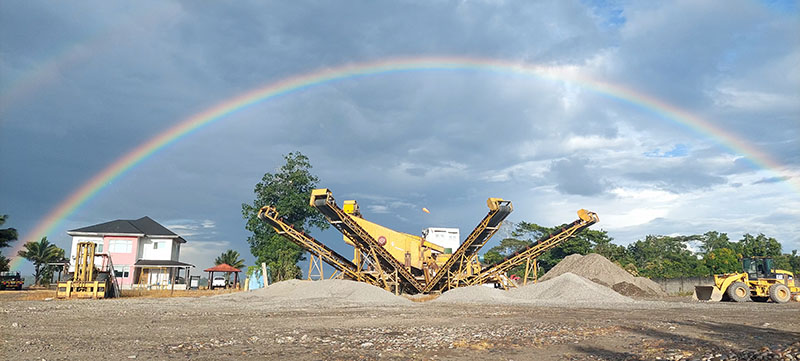
Feed the crushed material into a multi-deck vibrating screen. This stage separates the product into various size fractions. The target fraction for construction sand typically falls between 150 microns (0.15 mm) and 4.75 mm (No. 4 sieve). Oversized material goes back to the crusher (in a closed-circuit system), while undersized material (fines) may be removed or processed further, depending on the product specification. Precise classification is vital to meet the stringent gradation requirements of ASTM C33 or equivalent international standards.
-
Washing and Attrition Scrubbing (Optional but Recommended):
To produce high-quality sand suitable for critical applications like concrete, washing is often essential. A sand screw washer removes clay, silt, and organic impurities. Add an attrition scrubber to the circuit to scrub particle surfaces, ensuring cleaner, higher-quality sand. This step improves the final product’s performance in binding with cement.
-
Dewatering and Final Drying:
The washed sand contains significant water. A dewatering screen or a combination of a screen and a dewatering classifier can reduce moisture content. For a dry product—required for some construction applications, such as dry-mix mortar—a fluid bed dryer or a rotary dryer provides the final drying stage.
-
Quality Control and Stockpiling:
Test the final processed zeolite sand in an on-site lab for key parameters: grain size distribution, clay/silt content, specific gravity, and absorption. Once it passes quality checks, the sand is conveyed to stockpiles, ready for loading and shipment.
Essential Equipment for Processing Zeolite into Construction Sand
Establishing a processing line for zeolite sand requires a carefully selected suite of equipment designed for size reduction, classification, and material handling. Here are the core machinery for zeolite sand process:
- Primary Crusher: A jaw crusher is the workhorse for the initial size reduction, capable of handling large, raw zeolite rock and providing reliable, high-tonnage breaking.
- Secondary/Tertiary Crusher: A cone crusher offers efficient intermediate crushing. For the final stages, we highly recommend a Vertical Shaft Impactor (VSI) crusher. It is the key to producing the desired cubical, well-graded particle shape that mimics natural sand.
- Screening Equipment: Multi-deck vibrating screens are indispensable for classifying the crushed material into precise size fractions. They ensure the final product’s gradation meets construction specifications.
- Material Handling Systems: A network of belt conveyors, feeders (like vibratory or apron feeders), it requires transfer chutes to move material seamlessly between different stages of the processing plant.
Washing and Cleaning Equipment:
- Sand Screw Washer: A simple, effective machine for removing clays and silts.
- Attrition Scrubber: Used to scrub particles clean through high-energy particle-on-particle interaction.
- Hydrocyclones: Employ centrifugal force to separate fine particles from the sand product.
Dewatering and Drying Equipment:
- Dewatering Screens: Use vibration and screen inclination to drain free water from the sand.
- Rotary Dryers or Fluid Bed Dryers: For applications requiring ultra-low moisture content, these dryers use heated air to evaporate residual water.
- Dust Collection System: A baghouse dust collector or similar system is critical for controlling airborne particles during crushing, screening, and drying, ensuring worker safety and environmental compliance.
- Power and Control Systems: It needs a dedicated electrical supply and a centralized PLC (Programmable Logic Controller) control panel to automate and monitor the entire processing line for optimal efficiency and safety.
- Laboratory Equipment: A basic on-site lab should contain sieve shakers for gradation analysis, ovens for moisture testing, and equipment for measuring specific gravity and absorption.
Key Considerations and Potential Benefits
Before investing in a zeolite-to-sand operation, it’s crucial to conduct thorough geological and market assessments. Not all zeolite deposits are suitable; the material must have the right hardness and composition to produce durable sand. Extensive testing of the final product in concrete or mortar mixes is non-negotiable to validate performance.
- The potential benefits, however, are substantial. This process allows mining companies to valorize a specialty mineral for a large-volume, stable market. It can provide an eco-friendly alternative to river sand mining. Furthermore, zeolite sand’s unique properties may offer performance advantages in some applications, creating a potential premium product niche.
- By understanding the material, implementing the correct process, and investing in the right equipment, forward-thinking mining operations can successfully turn zeolite into a valuable construction sand product, diversifying their revenue streams and contributing to a more sustainable built environment.
We offer customization for additional models to meet the diverse requirements of our customers. The price of the mining equipment will be determined by the manufacturer’s type, machine model, manufacturing process capacity, etc. We can provide a range of mining equipment, including stone crushers. You are welcome to consult JXSC‘s professional engineers to get a quotation based on your requirements. We can design a sand-making and crushing production line flow chart for you.
