
The construction industry is facing a paradox. As urban landscapes expand and infrastructure projects reach new heights, the demand for high-quality fine aggregates has increased. Yet, the primary source of this essential material—natural river sand—is becoming increasingly scarce. For decades, dredging riverbeds was the standard practice; however, escalating environmental regulations, rising extraction costs, and the logistical challenges of transportation are forcing sand and gravel operations to rethink their strategies. As the cost of river sand extraction soars, a technologically superior and economically viable alternative has emerged: Manufactured Sand (M-Sand), specifically from crushing pebbles. For quarry operators looking to maintain profitability while meeting strict construction specifications, transitioning to pebble-based M-Sand is no longer just an option—it is a strategic necessity.
This article delves into the pebble sand-making process, comparing it directly with natural river sand, and examines the essential machinery—from jaw crushers to vertical shaft impactors—that enables this transformation.
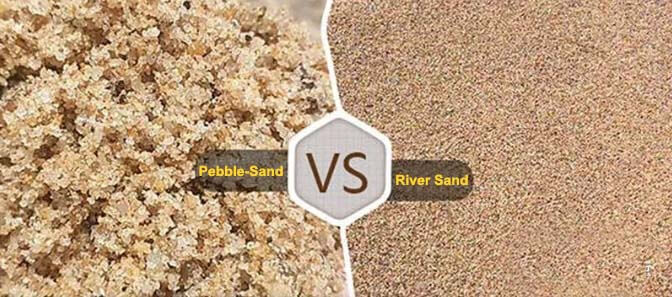
Pebble M-Sand vs. River Sand
When comparing pebble-manufactured sand to traditional river sand, the conversation has shifted from “Can it compete?” to “In what ways is it better?” Recent studies and field applications provide a clear picture.
The Case for River Sand:
River sand has been the traditional favorite due to its rounded particle shape. This smooth texture historically offered good workability in concrete mixes, requiring less water for mixing. However, its availability is inconsistent, and its quality varies wildly depending on the source location.
The Superiority of Pebble M-Sand:
Pebble-manufactured sand is not excavated, but processed. Here is why it is winning the quality battle:
- Consistent Gradation: Unlike river sand, which can contain silt, clay, and organic impurities that weaken concrete, M-Sand has a controlled gradation. It is free from such contaminants, ensuring higher unit weight and lower permeability in concrete structures.
- Mechanical Strength: While some studies show that M-Sand compressive strengths can be marginally lower than ideal river sand, they consistently remain within acceptable limits for structural concrete. More importantly, the angular and cubical shape of M-Sand particles improves the interlocking bond with cement paste, often resulting in better overall structural integrity compared to concrete made with smooth, rounded river sand.
- Economic and Environmental Sense: In regions facing sand shortages, the cost of river sand has skyrocketed. Research confirms that manufactured sand is often significantly less expensive than dredged river sand -1. Furthermore, using M-Sand reduces the environmental degradation caused by riverbed dredging, preserving aquatic ecosystems and groundwater levels.
For modern construction and development, pebble M-Sand directly replaces river sand. It offers a quality and consistency that natural deposits cannot guarantee.
The Process: Turning Pebbles into Premium Sand
Transforming hard river pebbles into construction-grade sand requires a strategic combination of heavy machinery. The goal is to take a large, hard rock and systematically process it to fine aggregates with a specific shape and size.
A standard pebble sand production line relies on a symbiotic relationship between crushing and shaping equipment. The process generally follows a “two-stage crushing plus shaping” flow chart.
Stage 1: Primary Crushing (Size Reduction)
Raw pebbles are often too large to feed directly into a sand maker. It should be crushed to a manageable size.
Jaw Crusher (The Primary Crusher): This is the workhorse of the primary stage. It uses a compressive force to break down large boulders into smaller chunks (typically 100-150mm). Its simple structure and durable design make it ideal for processing hard, abrasive materials like pebbles.
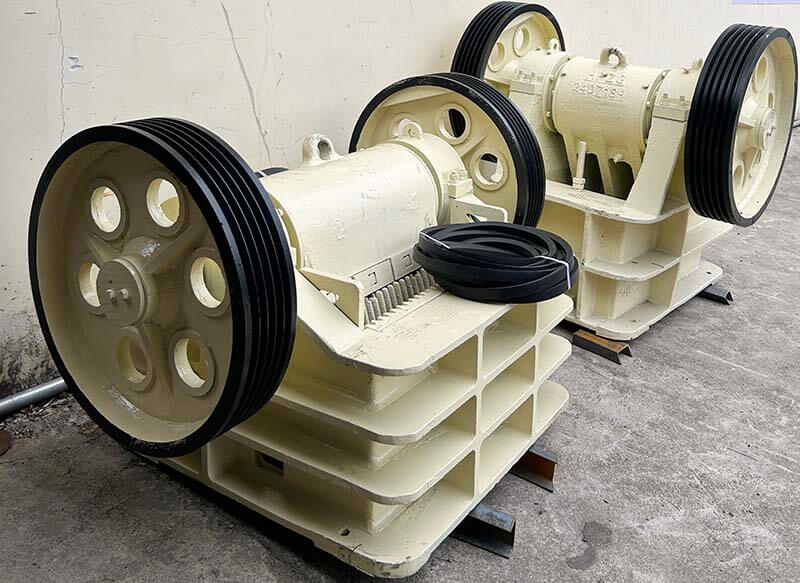
Cone Crusher (The Secondary Crusher): For high-hardness materials like pebbles, the cone crusher is the superior choice for secondary crushing. It further reduces the material from the jaw crusher into a finer size suitable for the sand making machine.
Stage 2: Sand Making & Shaping (The Core of the Operation)
It is where pebbles finally become “sand.” The equipment used here determines the quality of the final product.
-
Fixed Sand Making Machines
For stationary plants with high throughput, fixed vertical shaft impact (VSI) crushers are the industry standard. These machines are renowned for their ability to produce high-quality cubical particles.
The VSI sand making machine operates on a brilliant “rock-on-rock” principle. Material is fed into a high-speed rotor and accelerated to speeds of 60-75m/s before being thrown out against a curtain of falling material or metal anvils. This autogenous crushing process minimizes wear and tear while maximizing the crushing effect.
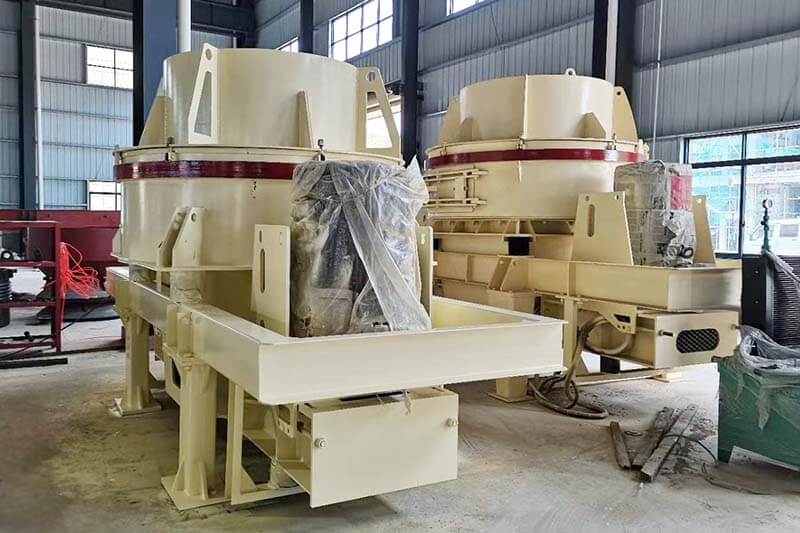
Key Advantages of VSI Crushers for Pebble Processing:
- Exceptional Grain Shape: They are specifically designed for sand production and stone shaping, producing a cubical product that meets the strict standards for construction aggregates.
- High Capacity: Modern VSI units can handle substantial throughput, with capacities ranging from 120 to over 500 tons per hour, ensuring that they meet production targets.
- Controlled Gradation: The crushing cavity can be adjusted to modify the particle size distribution, allowing operators to fine-tune the fineness modulus of the sand to meet specific customer requirements.
- Automated Maintenance: Features like hydraulic opening devices and automatic lubrication systems (with dual oil pumps for fail-safe operation) reduce downtime and extend the life of the machine.
-
Mobile Sand Making Plants
For operations that require flexibility or are working across multiple sites, the mobile sand maker is a game-changer. It involves mounting a sand-making machine (like a VSI or HVI crusher) onto a mobile chassis.
- Flexibility: Mobile crushers can move the plant closer to the stockpile, significantly reducing the cost of hauling raw material.
- Cost Efficiency: Newer fully electric mobile units eliminate diesel fuel expenses, reducing operating costs by an estimated 40-50% while also lowering maintenance requirements due to simpler electric drivetrains.
- Ease of Operation: These units are designed for simplicity, making them easy to operate and maintain without requiring highly specialized skills.
Stage 3: Screening and Washing
After crushing and shaping, the sand is passed through vibrating screens to separate it into different size fractions. Return oversized material to the crusher. To ensure the final product is free from dust, it will use a sand washer for cleaning.
Optimizing Your Investment: Cost Considerations
The transition to pebble sand production involves capital investment, but the return is realized through lower operating costs and a higher-value product.
The total cost of setting up a pebble processing line varies based on the combination of equipment chosen—whether you opt for a stationary jaw crusher paired with a VSI, or a more expensive but flexible mobile solution. However, the operational savings are clear.
- Reduced Labor: As noted in the video reference, a modern automated production line requires minimal manual intervention, reducing labor costs and human error.
- Lower Energy Consumption: Running electric motors off-grid power is significantly cheaper than running diesel generators. Modern electric crushers can cut half the energy costs compared to traditional diesel-powered units.
- Wear and Tear: The “rock-on-rock” design of VSI crushers ensures that the main components do not bear the brunt of the abrasion, keeping wear costs lower than traditional grinding methods.
Conclusion
As river sand extraction becomes a battle against rising costs and environmental pushback, pebble-manufactured sand stands out as the clear winner. It offers superior consistency, comparable or better mechanical strength, and a sustainable supply chain free from the whims of nature.
By investing in a combination of durable primary crushers like jaw and cone crushers, and a high-performance sand-making machine like a VSI, you can turn abundant, low-cost pebbles into high-demand manufactured sand. Whether you choose a fixed installation for massive, continuous output or a mobile crusher for site-to-site flexibility, the technology is available to ensure your operation remains competitive, efficient, and profitable for decades to come.
We offer customization for additional models to meet the diverse requirements of our customers. The price of the mining equipment will be determined by the manufacturer’s type, machine model, manufacturing process capacity, etc. You are welcome to consult JXSC‘s professional engineers to get a quotation based on your requirements. We can design a sand-making and crushing production line flow chart for you.
