
The global construction industry is facing a significant challenge: the depletion of natural river sand. It has led to a surge in the demand for manufactured sand (M-sand), a sustainable and high-quality alternative produced by crushing rocks. But a common question for new and existing producers is: what ore is best for sand making? And once you have the raw material, what machines do you need to turn it into profitable sand?
The answer is not one-size-fits-all. The “best” ore depends on your project requirements, from high-strength concrete for a skyscraper to general-purpose plaster for housing. Similarly, the right equipment hinges on the ore’s characteristics, primarily its hardness and abrasiveness. This guide explores the most suitable materials for M-sand production and the essential machinery for a successful, high-efficiency sand-making line.
Top Ores for High-Quality Manufactured Sand
Selecting the right parent rock is the first and most critical step. The ideal rock should have high compressive strength (typically >80MPa) and must not contain impurities that could cause alkali-aggregate reactions in concrete. Here are some of the best options available:
-
Hard Rock Ores (Ideal for High-Strength Concrete)
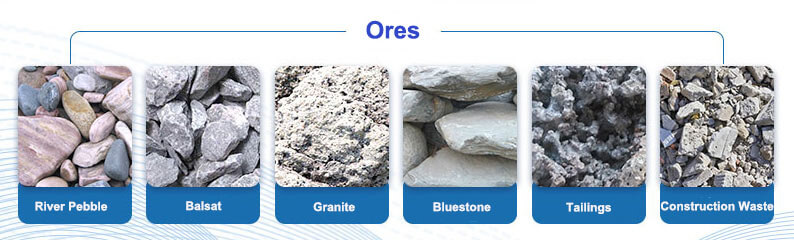
- Granite: Abundant and durable, granite is a fantastic raw material. Its high quartz content and low sulfide levels produce sand with excellent strength, making it ideal for high-grade concrete. The key is managing the powder content during production to ensure the final sand meets specifications.
- Basalt: Known for its deep color and toughness, basalt sand offers unique advantages. It is incredibly strong yet relatively lightweight, providing sound and heat insulation properties. Premium aggregate for lightweight concrete in high-rise buildings.
- River Pebble / Cobblestone: As a naturally rounded stone, river pebble is the gold standard for sand making. Its hardness ensures that the final sand has a superb, cubical grain shape and excellent chroma, making it a perfect substitute for natural sand in both strength and aesthetics.
- Quartzite and High-Silica Rocks: With a Mohs hardness of 7, quartzite is highly abrasive but produces sand with exceptional durability. This sand is not only used in high-strength concrete (C60 and above) but also commands a premium price in industrial markets, such as for glass manufacturing, high-purity filters, and even electronics.
-
Medium-Hard Ores (Cost-Effective for General Use)
- Limestone: One of the most versatile and cost-effective materials for sand production. Limestone is easier to crush than hard rock. The resulting sand is excellent for general construction, road bases, and mortar. A major benefit is that the fine stone powder produced can be recycled and used in other industries.
- Sandstone: Sandstone, with its high quartz content, is a common and viable option. It processes well in sand production lines, though producers must carefully manage the generation of stone powder to maintain the right gradation.
-
Sustainable and Alternative Materials
- Construction & Demolition Waste: In a circular economy, processed concrete debris and bricks are excellent raw materials. Using a mobile crusher, recycle waste to sand for low-specification projects such as backfilling and road base, significantly reducing landfill waste and material costs.
- Tailings and Slag: Mining tailings and industrial slag can be recycled into valuable construction sand. It not only solves a waste problem but also creates a new revenue stream, turning an environmental liability into an economic asset.
- Expert Tip: The lithology of your parent rock directly affects the crushing process and final grain shape. For high-value applications like railway ballast or airport runways, harder rocks like granite and basalt are non-negotiable.
Essential Equipment for a Modern Sand Making Plant
Once you’ve selected your raw material, the next step is choosing the right machinery. A typical M-sand production line follows a multi-stage process: coarse crushing → medium crushing → fine crushing/sand making → screening → dust removal. Here are the key pieces of equipment you’ll need.
-
Primary Crushing: The Workhorse
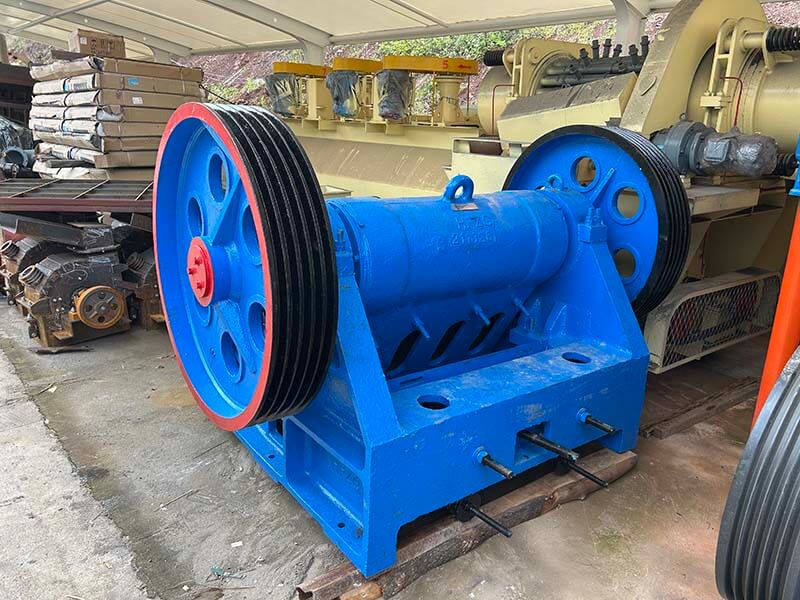
Jaw Crusher: This is the first stage crusher for almost all rock types. Its role is to take boulders (up to 1200mm) and reduce them to a manageable size (100-200mm) for secondary crushers. Jaw crushers are renowned for their durability and are essential for handling hard, abrasive rocks like granite and quartzite.
Selection Guide: For high-wear scenarios such as crushing quartz, opt for jaw plates made of high-manganese steel to significantly extend wear life.
-
Secondary Crushing: Preparing for the Sand Maker
- Cone Crusher: If your parent rock is hard and abrasive (granite, basalt, river pebble), the cone crusher is your best choice for secondary crushing. It uses a “layer compression” principle to crush the rock, which minimizes flaky particles and produces a more cubical shape, making the subsequent sand-making process more efficient.
- Impact Crusher: For medium-hard rocks like limestone, an impact crusher is a highly efficient and cost-effective secondary crusher. It offers a high reduction ratio and produces an excellent cubical shape early in the process. However, its wear parts wear out quickly when used on hard rocks.
-
The Core: Fine Sand Making Machines
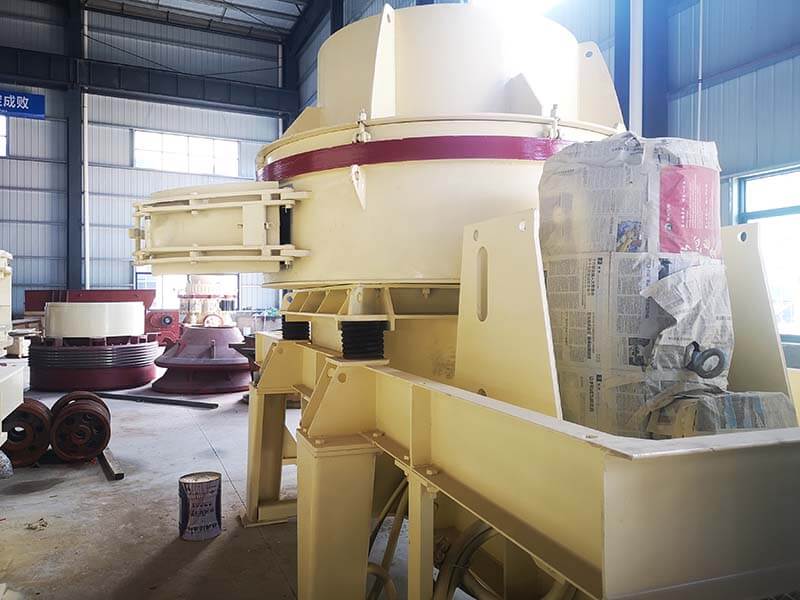
It is where the magic happens, transforming small stones (5-30mm) into fine, 0-5mm sand. The most advanced and widely used machine today is the Vertical Shaft Impact (VSI) Crusher.
VSI Crusher is the industry standard for producing high-quality M-sand. It works by hurling the material at high speed against a crushing chamber or a bed of rock.
Key Advantages:
Excellent Grain Shape: It produces superior cubical particles, ideal for asphalt.
Dual-Crushing Modes: Offers two distinct operational modes:
- “Rock on Rock”: Material impacts against a bed of material. It is the best mode for hard, abrasive rocks as it minimizes wear and tear on the machine’s internal parts.
- “Rock on Iron”: Material impacts against metal anvils. This mode provides a higher crushing ratio and is more efficient for softer rocks such as limestone.
Flexible Output: Modern VSI crushers feature variable frequency drives, enabling operators to adjust the rotor speed and precisely control the sand’s fineness modulus to meet specific project requirements.
Other Types of Sand Makers:
- Hammer Crusher (Fine): A simpler, lower-cost option suitable for small-scale, dry operations. However, it has higher wear rates and produces more dust, making it less common in modern, large-scale plants.
- Double Roller Crusher: It is best for small to medium-scale operations in processing soft to medium-hard materials. It offers precise control over output size with minimal dust generation, but has a lower throughput than VSI crushers.
-
Ancillary Equipment: The Key to Quality and Efficiency
- Vibrating Screens: After crushing, screen the material. Vibrating screens separate the product into different sizes (e.g., 0-5mm sand, 5-10mm chips). Using square-hole screens is recommended for better control of particle shape.
- Dust Removal Systems: Modern sand plants use either dry or wet methods to control the stone powder content (particles < 0.075mm). Dry methods use air separators, while wet methods use sand washing machines. A certain amount of stone powder (5-10%) is beneficial for concrete workability. High-efficiency pulse-jet dust collectors ensure the plant meets environmental standards by capturing over 99% of airborne dust.
- Sand Washing Machines: In wet processing, wheel or spiral sand washers rinse the sand and remove excess fines. It must be paired with a fine sand recovery unit to prevent the loss of valuable fine sand particles in the wastewater.
Matching Equipment to Ore: The Golden Rule
The most important principle in designing a sand-making plant is matching the equipment to the raw material.
For Hard & Abrasive Rocks (Granite, Basalt, Quartzite, River Pebble):
The best combination is Jaw Crusher + Cone Crusher + VSI Crusher (Rock-on mode). This setup prioritizes durability and low wear costs. The cone crusher is essential for reducing the rock’s load on the VSI, which then focuses on shaping the sand.
For Soft to Medium Rocks (Limestone, Dolomite, Gypsum):
A more cost-effective combination is Jaw Crusher + Impact Crusher + VSI Crusher. The impact crusher can handle higher throughput, and the VSI in “rock-on-iron” mode can boost efficiency and production rates.
For Variable or Dispersed Sites (Building Waste, Small Quarries):
A Mobile Crushing Plant (tracked or wheeled) integrates a vibrating feeder, crusher machine, and screen into one unit. It offers unmatched flexibility, allowing you to move the plant to the source of the material, drastically reducing transportation costs.
Conclusion
Producing high-quality manufactured sand is both an art and a science. By carefully selecting the right parent rock—whether it’s durable granite for a dam or versatile limestone for a housing project—and pairing it with a well-designed production line, you can create a product that not only matches but often surpasses natural sand in performance. Investing in the correct equipment, with the VSI crusher at its heart, ensures you can produce consistent, high-value sand that meets the strict demands of modern construction while operating efficiently and sustainably.
We offer customization for additional models to meet the diverse requirements of our customers. The price of the mining equipment will be determined by the manufacturer’s type, machine model, manufacturing process capacity, etc. You are welcome to consult JXSC‘s professional engineers to get a quotation based on your requirements. We can design a sand-making and crushing production line flow chart for you.
