
For centuries, river sand has been the undisputed champion of the construction and manufacturing industries. Its natural granular structure and easy availability made it the go-to aggregate for concrete, mortar, and a myriad of other applications. However, rampant and often unregulated sand mining has led to severe environmental consequences, including riverbank erosion, loss of biodiversity, and the alteration of river courses. This, coupled with the depletion of natural reserves and fluctuations in quality, has compelled the industry to seek sustainable and high-performance alternatives.
Enter quartz sand. This abundant mineral is emerging as a powerful and often superior substitute. But can it truly replace river sand across the board? And if so, how is it processed? This in-depth guide will explore the viability of quartz sand as a replacement and delve into the essential machinery used to produce it.
1: Can Quartz Sand Replace River Sand?
The short answer is yes, in many critical applications, quartz sand is not just a substitute but an upgrade. However, it’s not a one-size-fits-all replacement. Let’s break down the comparison.
-
Chemical Composition & Purity
- River Sand: Is a heterogeneous mixture of various minerals, including quartz, feldspar, mica, iron oxides, and other impurities. Its composition varies drastically depending on the source location. This variability can lead to inconsistencies in the final product, such as efflorescence (white salt deposits) or reactive aggregates in concrete.
- Quartz Sand: Primarily composed of Silicon Dioxide (SiO₂), often with a purity exceeding 95%. This chemical inertness and consistency are its greatest strengths.
- Verdict: Quartz sand wins for applications requiring chemical stability, purity, and predictable performance.
-
Physical Properties: Shape, Size, and Strength
- River Sand: Particles are typically rounded and smooth due to natural weathering and water erosion. This shape is beneficial for workability in masonry mortar, but can reduce the compressive strength of high-grade concrete.
- Quartz Sand: Manufactured sand (M-Sand) from quartz is produced by crushing, resulting in angular and cubical particles. This shape creates a better mechanical interlock, resulting in higher compressive strength, a reduced risk of cracking, and lower cement consumption for the same strength.
- Verdict: Quartz sand wins for structural concrete and high-strength applications where internal cohesion is paramount.
-
Moisture Content & Control
- River Sand: Has a high and unpredictable moisture content. It is not convenient to control.
- Quartz Sand: As a manufactured product, it has little moisture content. It allows for precise control over the concrete mix design, ensuring consistent and reliable results batch after batch.
- Verdict: Quartz sand wins for precision engineering and quality-controlled production environments.
Summary: The Verdict on Replacement
Quartz sand is not just a viable alternative; it is a technologically advanced and environmentally responsible choice for most industrial and high-performance construction applications. While it may require slight mix design adjustments for plastering, its benefits in strength, consistency, and purity make it the future of the aggregate industry. The transition is not about a simple 1:1 swap but about understanding and leveraging its superior properties.
2: The Engine of Production: Quartz Sand Crusher Equipment Types
Producing high-quality quartz sand requires a series of crushing and screening machines. The goal is to break down large quartz rocks into sand-sized particles (typically 0.075mm to 4.75mm) with the desired shape and gradation.
Here are the primary types of crushers used in a quartz sand production line:
-
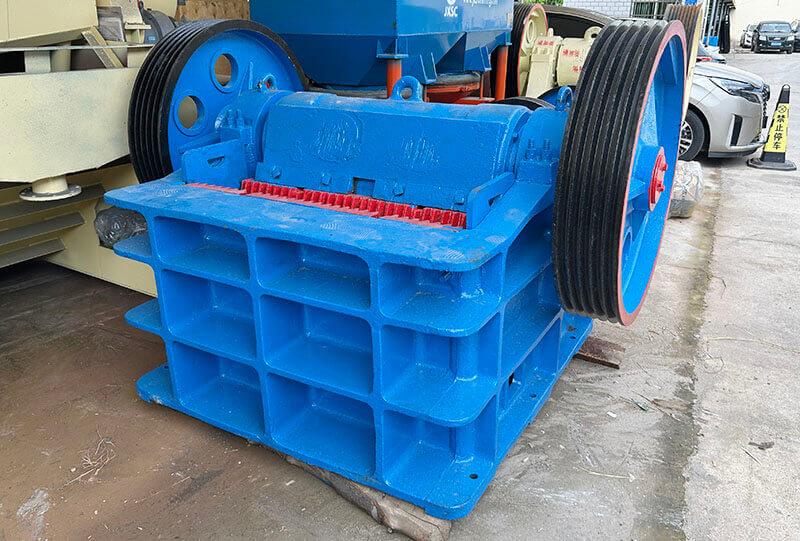
Jaw Crusher: The Primary Workhorse
Function: This is the first stage of crushing. Feed large blocks of raw quartz (up to 1-2 meters in size) into the jaw crusher, which uses a fixed and a moving jaw to apply immense pressure and break them down into smaller rocks (around 150-200mm).
Key Characteristics:
- High Crushing Ratio: Capable of reducing large rocks significantly in a single pass.
- Robust and Reliable: Simple design makes it durable and easy to maintain.
- Purpose: prepare the material for the secondary crushing stage.
-
Cone Crusher: The Secondary Refiner
Function: Feed the output from the jaw crusher into a cone crusher for secondary crushing. It operates by squeezing the rock between an eccentrically gyrating spindle and a concave hopper. This stage further reduces the rock size to smaller, more uniform gravel (around 20-60mm).
Key Characteristics:
- Produces a More Cubical Product: Compared to other secondary crushers, it creates a better-shaped particle, which is beneficial for the final sand.
- High Efficiency and Capacity: Ideal for hard and abrasive materials.
- Versatile: Allows for adjustment of the discharge setting to control the final product size.
-
Impact Crusher (Including VSI): The Sand Maker
Function: This is the most critical machine for actually making sand. Impact crushers use high-speed impact forces, either from hammers (Horizontal Shaft Impactor – HSI) or by throwing the rock against anvils (Vertical Shaft Impactor – VSI).
Key Characteristics:
- Superior Particle Shape: VSI crushers are renowned for producing the most desirable cubical and well-graded sand particles. They adopt a “rock hit rock” or “rock hit iron” crushing principle that shapes the particles through repeated impacts.
- Control over Fines: Excellent for controlling the amount of micro-fines (dust) in the final product.
- The Heart of the System: For producing high-quality construction sand, a VSI is often the preferred and indispensable choice.
-
Sand Making Machine
It’s the machine that takes the small gravel from the cone crusher and turns it into the final, market-ready quartz sand.
The Complete Production Line Flow:
A typical, efficient quartz sand plant follows this process:
- Primary Crushing: Large quartz rock → Jaw Crusher
- Secondary Crushing: Smaller rocks → Cone Crusher (or sometimes an Impact Crusher)
- Sand Making: Small gravel → Vertical Shaft Impactor (VSI) / Sand Making Machine
- Screening: The crushed material is sent to a Vibrating Screen to separate it into different sizes. Send Oversized material back for further crushing.
- Washing (Optional): Use A Sand Washer to remove dust and impurities, resulting in a higher purity product, especially for glassmaking or high-end composites.
Conclusion: Embracing the Shift
Driven by environmental necessity and proven technical superiority, the shift towards manufactured quartz sand is inevitable. By understanding its properties and investing in the right crushing equipment—like a robust system featuring a Jaw Crusher, Cone Crusher, and a pivotal VSI Sand Maker—industries can not only mitigate their environmental impact but also produce stronger, more consistent, and higher-quality end products. The future of construction and manufacturing is being built, grain by grain, on the foundation of quartz sand.
We offer customization for additional models to meet the diverse requirements of our customers. The price of the mining equipment will be determined by the manufacturer’s type, machine model, manufacturing process capacity, etc. We can provide a range of mining equipment, including stone crushers. You are welcome to consult JXSC‘s professional engineers to get a quotation based on your requirements. We can design a sand-making and crushing production line flow chart for you.
